Electrically conductive polymers, like polyaniline, in medical equipment, automobiles, and much other advanced technology, keep numerous fragile components together. What solvent aids synthesis the best has been a significant barrier to polyaniline synthesis for industrial electronics applications for many years.
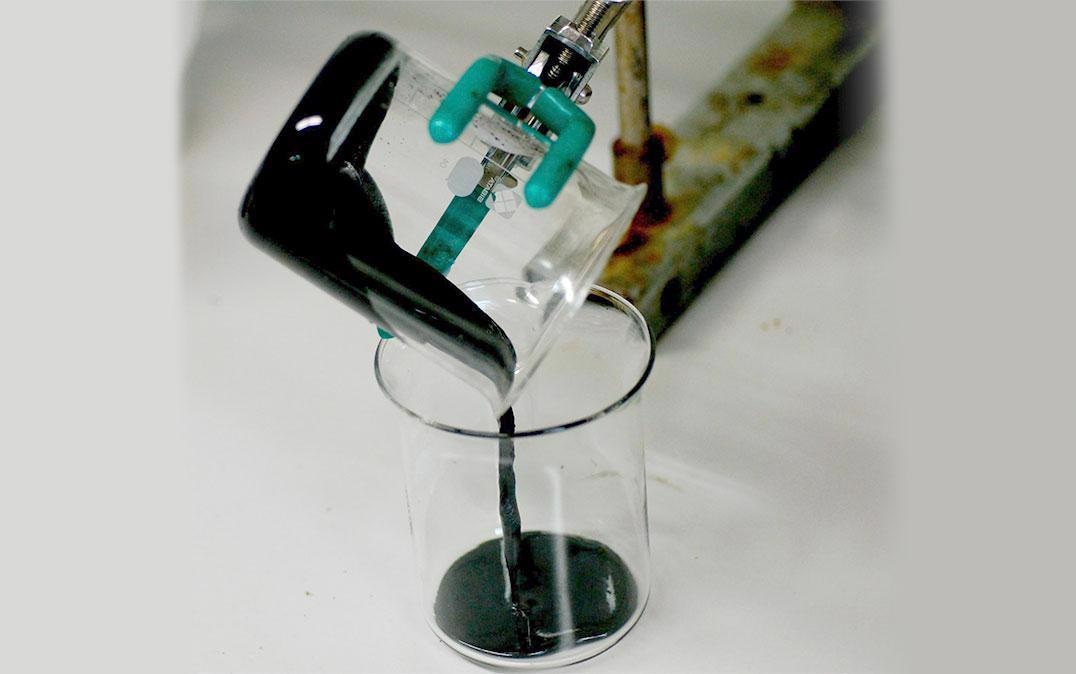
图片来源:Tsukuba大学
为了降低产生聚苯胺的费用和复杂性并启用有益的特征(例如形状),解决这个抽象问题至关重要。到目前为止,不可能使用各种廉价,低沸点的溶剂,这些溶剂将基本上有助于柔性聚合物处理模式,例如喷墨打印。
Scientists from the University of Tsukuba and cooperating partners have synthesized polyaniline in a variety of common solvents for a work that was recently published in聚合物塑料技术和材料亚博网站下载。由于这种增强的生产和处理聚苯胺的能力,生产将大大简化,制造成本将降低。
聚苯胺是常规技术和先进技术中极为通用的聚合物,但是可以将溶剂用于合成的限制长期以来阻碍了这种多功能性。我们发现如何促进各种溶剂中的聚合将在基础研究和工业应用中有用。
Hiromasa Goto, Study Senior Author and Professor, University Of Tsukuba
When researchers added a modest amount of iodine to the reaction mixture, they were able to convert aniline sulfate into polyaniline in a single step. This technique was compatible with a variety of solvents, including non-toxic ethanol and dichloromethane.
根据广泛的实验特征,使用这种方法制成的聚苯胺具有相同的结晶度和电特性。
A particularly exciting result is the ease of preparing industrially useful polymer alloys, such as blends with polystyrene or cellulose derivatives. Electrically conductive paint, advanced rubber blends, and other materials are now straightforward to prepare, which we expect will facilitate product development in diverse fields。
Hiromasa Goto, Study Senior Author and Professor, University Of Tsukuba
Iodine, according to the researchers, is an electron-acceptor dopant that makes it easier to produce localized polarons, which are essential for polymerization followed by radical chain reactions.
这项研究的发现将使聚苯胺更适合喷墨印刷和其他实用的处理技术,这将使生产印刷电路板和其他典型的现代电子组件变得更加容易。
Many common and cutting-edge technologies will be easier to produce and more affordable if we concentrate on the abstract problem of solvent compatibility.
期刊参考:
Goto, H.,et al。((2022) Synthesis of polyaniline in organic solvents.聚合物塑料技术和材料亚博网站下载。https://www.tandfonline.com/doi/abs/10.1080/25740881.2022.2075270
Source:https://www.tsukuba.ac.jp/en/